All Categories
Featured
Direct Consumer Advice for Selecting 2026 Medicare Plans
How Whole Life Insurance Functions for Family Security

Reviewing 2026 Medicare Advantage Options
Table of Contents
An HMO insurance coverage strategy is often considered being more cost-effective due to its lower monthly premiums and hassle-free due to its requirement that clients must have a medical care doctor to handle their care. A PPO insurance coverage strategy is known for its versatility as it enables clients to handle their own care and look for out various providers/specialists without needing a referral.
Comparable to general insurance coverage plans, the two main Medicare Advantage strategies are HMO and PPO.While HMO and PPO insurance prepares continue to be the most common option for clients to pick from, there are a variety of other insurance alternatives. HMO and PPO insurance strategies are the 2 most typical health care insurance plans in the United States.
While these insurance strategies are different, they are comparable in the sense that they offer a patient with a network of physicians, healthcare facilities, and other doctor that help members with their health-care journey. "HMO" acts as an acronym for "Health care Organization," while "PPO" functions as an acronym for "Preferred Provider Organization." An HMO insurance plan is focused around a range of healthcare facilities and health care companies (referred to as an "HMO network") that have actually accepted deal with clients within the network's insurance strategy. A referral is needed for a client to see other experts that are in-network or out-of-network, and frequently, getting out-of-network care only takes place in emergency scenarios. This plan provides lower monthly premiums for its clients, making it an affordable insurance coverage option.
Typically, lower costs for prescriptions. A client can only see providers within the plan's network unless they have a recommendation for an outdoors expert, or it's an emergency situation.
Comparing PPO Provider Access versus Costs
This strategy likewise lets the patient coordinate their care and manage which suppliers they wish to see, versus having a main care medical professional. The patient has more flexibility with which suppliers they pick to see, whether they're within the strategy's network or out-of-network. Most times, there is no need for a recommendation if a patient cares to see an out-of-network professional.
The patient is accountable for managing their health care, vice a medical care doctor being in charge. A 'company network' refers to the list of medical professionals, professionals, medical facilities, etc that an insurance coverage agency agreements to supply medical services to its plan members. Service providers that are 'in-network' refer to the health care workers and healthcare facilities that are listed in the plan.
The expenses associated with an HMO strategy include deductibles, which is the amount a patient should pay before insurance contributions, and month-to-month premiums, which is the quantity secured of a patient's paycheck. Typically, the month-to-month premiums secured with an HMO strategy are lower than a PPO strategy's premiums.
Insurance in Redlands CA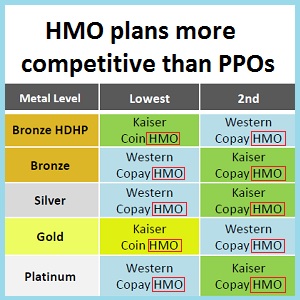
Yearly, this resulted in a $6,869 coverage on people and $19,445 protection on families, revealing a lower month-to-month premium in contrast to a PPO strategy type. Deductibles, month-to-month premiums, and copays are expenses commonly associated with a PPO strategy. Most times, the monthly premiums are gotten with a PPO plan that is more costly than an HMO strategy's premiums.
Navigating 2026 Medicare Enrollment Rules and Seniors
According to the Kaiser Household Structure 2018 Health Benefits Study, all companies using a PPO insurance coverage plan paid $592 as the month-to-month premium on a specific and $1,694 as the monthly premium on a household. Annually, this caused a $7,149 coverage on people and $20,324 coverage on families, revealing a greater monthly premium in contrast to an HMO plan type.
When trying to decide which plan is best, there are lots of aspects to consider, with a few of the most crucial being flexibility, expense efficiency, and coordination of care. If it's flexibility that is most important, then a PPO insurance plan might be a much better fit for they allow a client to have more control over which providers they see and when, regardless of a referral.

Another benefit to an HMO plan is that it needs a patient to have a medical care doctor that collaborates their care for them. This indicates that with a PPO insurance coverage strategy, the patient will need to handle their own care and oversee which providers/specialists they need to go to. In the end, one plan is ruled out better than the other.
Health insurance coverage plans do not cover dental insurance. To find out more on acquiring a dental plan, such as a dental HMO plan, 'DHMO strategy,' or a dental PPO strategy, 'DPPO strategy,' visit this resource. Once an American (who has actually been paying Medicare taxes for at least ten years) turns 65, they receive the medical insurance plan referred to as Medicare.

Latest Posts
Direct Consumer Advice for Selecting 2026 Medicare Plans

Evaluating Term Life Insurance Quotes
Building Family Security with Term Life Insurance